When somebody you respect is arrested, the first useful concern is straightforward: exactly how do we get them out, and what will it cost? The solution runs through two paths that appear similar but operate extremely differently. Money bail means you, or someone on your behalf, down payment the whole amount set by the court. Bail bonds, occasionally called guaranty bonds, bring a certified bond agent into the photo that assures the court you'll appear, in exchange for a nonrefundable charge. Both secure launch, yet the dangers, timelines, and repercussions deviate in means people frequently find just as soon as they are knee-deep in the process.
I've sat with family members passing over messed up cost savings at a prison home window and I've worked instances where a twelve o'clock at night call to a bondsman made the distinction in between a person sleeping in your home or investing 3 additional weeks behind bars. Understanding the trade-offs ahead of time assists you pick the alternative that absolutely fits your scenario as opposed to the one that simply really feels fastest.
What bond is implied to do
Bail is a court's means of taking care of threat in between arrest and last resolution. It is not penalty and it is not a tax obligation. The judge sets a buck number designed to achieve 2 objectives. First, incentivize the defendant to return for hearings. Second, protect public security by keeping high-risk defendants captive when ideal. In method, the numbers vary commonly based upon the territory, the fee, a person's history, and any legal schedules. For a low-level violation, bond may be $500 or the court may release the individual by themselves recognizance. For a serious felony, bond can run into the tens or thousands of thousands, if it is used at all.
Once bail is established, you either pay the full amount directly to the court or you work with a qualified agent who posts a surety bond. Both paths finish with the very same instant result: launch from wardship while the case moves on. How you get there and what occurs afterward are where the distinctions matter.
Cash bail in real terms
Cash bond is exactly what it seems like. You deposit the entire bail quantity with the court or jail. Numerous courts take cash, certified check, or a cashier's check. Some territories currently enable charge card payments with handling fees. When paid, the jail refines launch, which can take anywhere from one hour to a full day depending upon staffing and backlog.
If the offender appears for all needed days and abides by conditions, the court returns the cash at the end of the instance. That "end" https://elliottibgw176.image-perth.org/just-how-much-do-bail-bonds-expense-costs-and-aspects can take months. I've seen bonds locked up for 18 months in slow-moving felony dockets also when the offender never ever misses out on a hearing. The return is not ensured in full. Courts subtract fines, fees, additional charges, and occasionally restitution from your cash. If the person falls short to appear, the court can keep all of it. Getting it back after a missed court day normally needs a movement, a hearing, and evidence that the offender returned immediately or had a lawfully acceptable excuse.
People select money bail for an easy reason: price. If you have the total available, and you rely on the offender to follow through, cash money bail can be the least expensive option over the life of the instance. You stay clear of paying a bondsman's fee. You avoid security complications. The compromise is liquidity. Locking up $5,000 to $50,000 for months is not practical for many households. And if unforeseen court charges swallow the refund at the end, the "totally free" choice comes to be less free.
One more practical note: if a relative blog posts cash money bond in their very own name and the court later uses those funds to the accused's commitments, the poster sometimes really feels blindsided. The court sees those funds as the accused's safety, not a family members trust fund account. If you can not manage to lose the whole quantity, do not put it up.
How bail bonds work
Bail bonds include a third party: an accredited bond agent that releases a guaranty bond to the court guaranteeing the accused's look. The representative bills a premium, commonly 10 percent of the bail quantity in several states, in some cases reduced for high bonds or with discount rates allowed by regulation. That costs is nonrefundable. You pay it whether the case resolves in a week or a year, and whether every court day is ideal or not.
The bondsman assumes monetary threat. If the defendant falls short to appear, the court can surrender the bond and demand complete repayment from the guaranty business. To take care of that threat, representatives conduct a quick underwriting procedure. They inquire about work, house, co-signers, and connections to the neighborhood. They might call for collateral, such as a vehicle title or a lien on building, specifically for larger bonds. They likewise enforce conditions: regular check-ins, traveling limits, and prompt notification of any kind of modification in address.
The functional benefits are rate and access. I've protected launches at 2 a.m. on a Sunday by calling a bondsman who can post within an hour. For family members that can not pull together $20,000 in cash, paying a $2,000 costs to a bail representative can be the distinction in between freedom and weeks in pretrial apprehension. The expense is the premium itself, plus any kind of charges for tracking or electronic check-ins, and possible direct exposure if the defendant runs. If the person absconds and the court waives the bond, the agent will certainly transform to the co-signers and collateral to make themselves whole.
A constant misconception is that the bail bondsman's premium counts towards penalties or gets reimbursed at the end. It does not. The costs is the cost for the solution of risk-taking. If the defendant shows up and the bond is exonerated, the agreement ends. The cash paid to the representative does not come back.
Comparing expense, threat, and control
The prompt numbers make the first contrast clear. On a $10,000 bond:
- Cash bond calls for $10,000 up front, which you may recover months later, minus court deductions. A bail bond generally sets you back concerning $1,000 in advance, nonrefundable, with possible collateral.
That simple math misses out on essential subtleties.
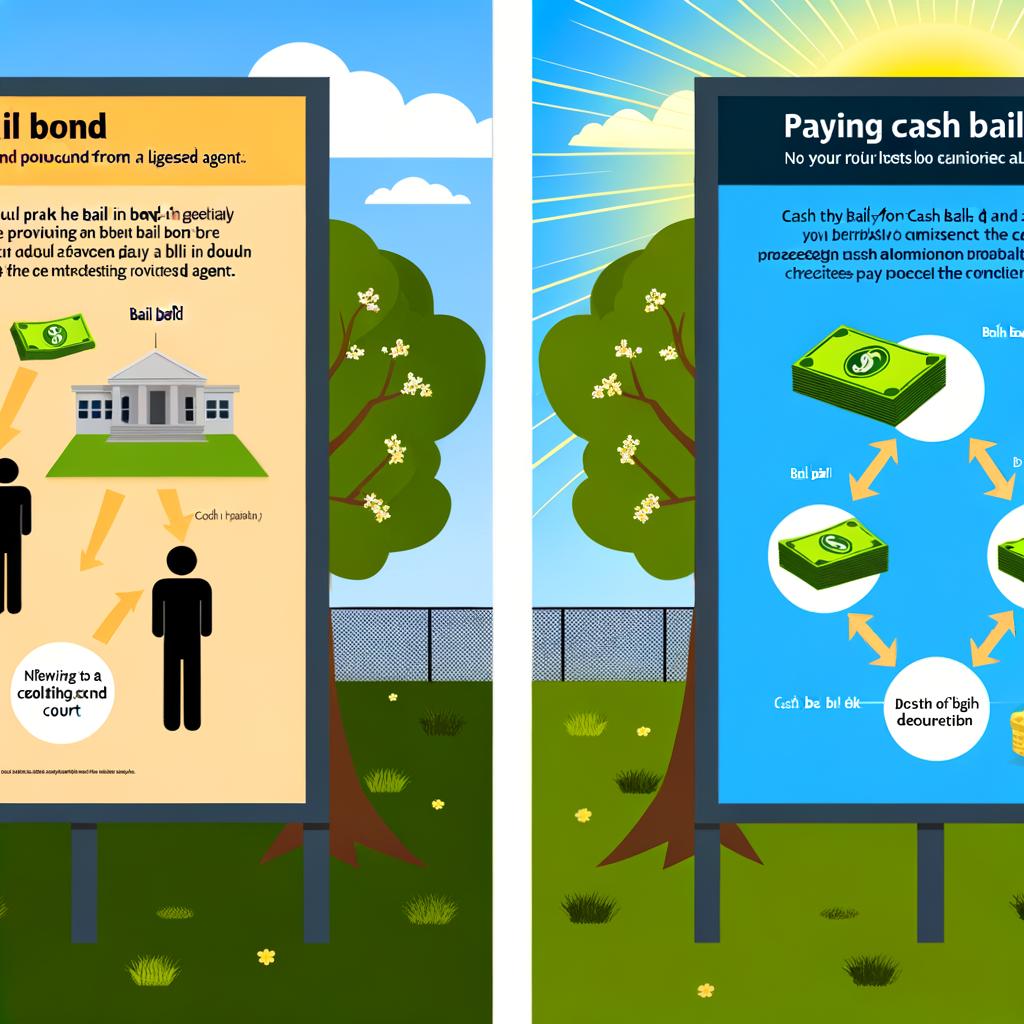
With money bail, you control your fate more directly. If the individual appears as required, your cash most likely returns, and you stay clear of third-party participation. Yet you bear the full danger of a missed out on court look. Courts take care of failings to show up in ways that range from forgiving to unyielding. In some counties, turning up the next day with guidance and an explanation restores the bond. In others, the forfeiture becomes long-term unless you fulfill rigorous statutory criteria. And bear in mind, your money bail is a simple target for court costs.
With a bail bond, the threat of loss initially drops on the surety, not you. Agents are skilled at solving failures to appear rapidly, due to the fact that it is their money on the line. I've seen a bail bondsman drive a client to court himself after a sick-day mix-up. Those partnerships can aid prevent forfeits and keep the defendant on the right track. But if things truly go sideways and the bond is waived, the indemnitors on the bond agreement pay. That can be you or whoever co-signed. The representative may recoup using the collateral you pledged.
Control feels various as well. With cash money bail, you are the poster yet you do not have lawful authority over the accused. You can not withdraw the bail simply since you are stressed. With a bail bond, agents generally schedule the right to surrender a defendant back to custodianship if they believe the danger has enhanced, for instance, if the person quits signing in or picks up a brand-new charge. That safety action decreases the surety's exposure, however it can surprise families that believed release was a one-way door.
Timelines, logistics, and what in fact occurs at the jail
Process varies, yet there is an usual rhythm. After arrest, the person waits for a bail setup, often at a preliminary appearance within 24 to 2 days. Some jurisdictions publish a bond timetable so you can act before a court sees the instance. As soon as you understand the number:
If you pay cash, you bring funds to the prison or court cashier. Anticipate identification verification, an invoice, and often a different kind that identifies the individual uploading the bail. Maintain every paper. Release follows after the prison confirms the payment and checks for holds from other jurisdictions.
If you utilize a bail bond, you sign an agreement with the representative, pay the costs, and provide any type of security. The representative prepares the bond documents, often with a power of lawyer from the surety business, and messages it with the jail. In numerous regions, bonds post digitally despite the hour. In rural areas, a person might literally provide the documentation. Processing once again takes time.
Either way, be patient. Evening and weekend break launches decrease when staffing is thin. Medical clearance can delay points. If the individual has warrants in an additional region, the prison might hold them waiting for transfer also if you upload bond locally.
Across multiple cases I have actually managed, the difference between publishing money and experiencing a bail bondsman usually came down to hours rather than days. The longer hold-ups were brought on by the jail's line up or by other holds, not by the payment approach. The main speed advantage of a bail bondsman is availability. Cashier windows close. Representatives get the phone.
Situations where cash bail makes more powerful sense
If you have the total without endangering your rent, energies, or pay-roll, money bond removes the charge and can simplify the end of the instance. It is particularly appealing when the bond is modest and the offender has a constant track record of abiding by court dates. As an example, on a $1,000 bond for a violation theft instance, paying cash money might bind funds for just a couple of months. In numerous courts, those funds return in almost complete, less a hundred bucks approximately in costs.
Cash also makes good sense when you wish to avoid ongoing oversight by a bondsman. Some individuals simply prefer not to add an additional layer of commitments like once a week check-ins or travel approvals. For an offender with anxiety or a night-shift work, the additional contacts can be burdensome.

There is a second, much less evident benefit to money bail. If the accused picks up brand-new charges while out, a bail bondsman may surrender the person. With cash money bail, unless a judge withdraws it, the cash does not automatically disappear and the individual is not automatically gone back to custodianship on the original situation. Obviously, the court can take another look at bail at any kind of time.
Situations where bail bonds address more challenging problems
High bail figures put squander of grab many households. On a $50,000 bond, locking up that quantity for a year can be difficult also for well-resourced homes. A 10 percent costs of $5,000, while painful, might be practical with help from buddies or a layaway plan licensed by state legislation. Many agents approve partial payments at finalizing as long as co-signers with solid credit history support the agreement.
Timing issues also. Arrests that occur on Friday evenings frequently accept Monday morning court calendars. A bond representative functioning nights can compress a weekend in custody into a few hours. I recall a daddy who called me after his kid, a first-year pupil, was detained on a probation offense with a $7,500 bond. A bondsman uploaded at 1 a.m. on Saturday. The apprentice made his Sunday change and kept his work, which implied rental fee made money and a spiral was avoided.
Bail bonds additionally provide framework. Some defendants need the extra responsibility. Normal check-ins, reminders, and the understanding that someone is evaluating their shoulder decrease missed appearances. Numerous representatives I recognize employ former probation police officers who are outstanding at nudging customers to court and attaching them with bus passes or calendars.
Collateral and co-signers: what you are truly promising
Bail bond contracts divide individuals right into roles. The offender assures to appear. Indemnitors, typically friend or family, debenture if the bond is forfeited. Security safeguards that pledge. It can be cash money, a car, precious jewelry, or real property. The agent analyzes security based on quick-sale worth, not sentimental worth or market price. A car with a tidy title may be enough for a $10,000 bond. A house can cover bigger bonds, yet putting a lien is slow and might not be functional for urgent releases.
Co-signers need to check out every line. You are accountable for the full bond amount if the defendant absconds and the guaranty can not recuperate the individual. Representatives will certainly attempt to minimize, and lots of courts permit set-asides if the defendant returns within a specified period, typically 90 days. But if points really fail, a judgment can land on the indemnitor. If you do not have clear boundaries with the defendant, hesitate prior to pledging the family minivan.
If a bondsman requests for security that really feels out of proportion, ask why. In some cases the belt-and-suspenders strategy reflects a risky profile: brand-new to the area, prior failures to show up, or slim work background. If you can shore up danger in various other means, for instance by including a stronger co-signer or agreeing to more regular check-ins, agents may decrease collateral requirements.
Failures to appear: what occurs next
No-shows can be found in tastes. There is the overslept arraignment that gets repaired that mid-day. There is the anxiety-driven evasion that spirals for weeks. There is the deliberate attempt to take off. Courts deal with each in different ways. Attorneys can often discuss a quash and reset if the lack was brief and the offender appears willingly. Longer lacks require sworn statements and even more explanation.
With money bond, the court might launch forfeit quickly. Notices head out, target dates pass, and the funds transform to the area's account. Reversing that path takes some time and lawful job. With a bail bond, the representative generally gets a home window to generate the offender before the loss ends up being last. That is why representatives move fast when a court day is missed out on. They call, they visit, and if needed, they organize a surrender. From the court's viewpoint, the system worked, due to the fact that the guaranty supplied the person.
Defendants must know that a failure to appear can develop a brand-new criminal charge, separate from the original instance. That fee can be a misdemeanor or a felony, depending upon the jurisdiction and the underlying instance. It likewise darkens future bail decisions. Judges read documents. A string of missed out on dates shuts doors.
The policy backdrop and neighborhood quirks
Not all states handle this similarly. Some territories have actually approached pretrial release structures that reduce cash bond for low-level offenses, using threat evaluations, suggestions, and nonfinancial conditions instead. Others count greatly on financial bond. In a few states, commercial Bail Bonds are not permitted, which means money bail or monitored release programs load the area. If you are dealing with a situation near state boundaries, do not presume rules carry over. Also within a state, region techniques vary. Urban courts might have pretrial services officers who can verify employment and suggest launch with conditions, while smaller sized counties rely a lot more on bond schedules and traditional guaranty bonds.
Court costs additionally differ extensively. I have actually viewed as little as a $25 management charge come off a returned money bail. I have also seen a number of hundred dollars in costs and additional charges subtracted. Ask the clerk concerning normal reductions before you decide.
Finally, repayment choices issue. Some courts approve third-party charge card with a service fee that varies from 2 to 5 percent. While that can place cash money bail available for some households, those charges are not minor on large amounts, and interest can worsen if you lug an equilibrium for months.
The human side: tasks, children, and situation outcomes
The most pricey part of pretrial detention is not the bail amount. It is the shed task, the missed out on childcare, and the concrete ways that being secured stress an individual to accept an appeal they could or else fight. District attorneys and courts know this vibrant, and numerous job diligently to stop unneeded apprehension. Still, the system relocates imperfectly. Getting a person out promptly can alter the entire situation trajectory. They come to meetings alert and prepared. They collect pay stubs and letters for the court. They show the court stability.
From that point of view, the "most inexpensive" path is the one that gets the accused back to life with the least interruption. If money bail indicates waiting 3 more incomes while the person sits in prison, consider the bail bondsman. If the premium would require you to avoid lease, ask guidance regarding pretrial launch or a bond reduction hearing. Defense attorneys frequently secure reduced bond or nonfinancial launch by offering employment proof, family support, and therapy strategies. Way too many households presume the preliminary bail is fixed. It is not. It is a starting point.
Common mistakes and how to avoid them
Families hurry under stress and miss details. These are the mistakes I see usually:
- Paying money bond in the offender's name, then discovering the court applied it to penalties without seeking advice from the family. Article in your own name if you can, and ask just how reimbursements are processed. Signing a bail bond without checking out the conditions. Clear up check-in schedules, travel limitations, and the specific occasions that trigger surrender. Ignoring the initial missed court day. Communicate right away with advise and the bondsman. Rapid activity can protect against a forfeit and a new charge. Over-collateralizing because of panic. If an agent demands security far above the bond, shop around or add a more powerful co-signer to lower the requirement. Failing to inquire about pretrial release options. Judges in some cases enable electronic tracking or coverage in lieu of financial bond if offered a concrete plan.
Keep documents organized. Court notifications get here by mail, e-mail, or both, and they do obtain lost. Develop a solitary folder for receipts, bond papers, and hearing days. Take a photo of the court date and time. Share it with everybody who requires to recognize, including the company who can readjust shifts.
Working with attorneys, staffs, and agents
Your defense attorney is your navigator. Before you post anything, ask advice to analyze the chance of a bail reduction or a recognizance launch. In some courts, a brief hearing with a plan can cut a $20,000 bail to $5,000 or transform it to monitored release. If you have already paid a bondsman, the premium is sunk. It is far better to wait half a day for a hearing than to secure a charge unnecessarily.
Clerks are underappreciated resources. They recognize refining times, peak hours, and which home windows approve which types of repayment. A respectful question at the counter can conserve 3 hours of standing in the incorrect line. When paying cash bond, request for a receipt that clearly mentions who posted and where any type of refund will certainly be sent. Verify the mailing address in writing.
As for bond agents, reputation matters. Go with a licensed company that describes terms in plain language and can indicate neighborhood recommendations. Agents that grab the phone after hours and that treat you like a client, not a suspect, reduce a stressful process. Watch out for anybody that assures outcomes or guarantees unique influence at the courthouse. Their work is to post a bond and handle threat, not to steer the case.
How to choose: an easy decision frame
Focus on three questions.
First, can you comfortably front the complete bail for the likely period of the case, comprehending that the money can be tied up for 6 to 18 months and may be minimized by court costs? If yes, cash bail may be your most economical route.
Second, what is the offender's track record and stability? If the individual has reliable transportation, consistent job, and a clean appearance background, the danger of loss is reduced. If the individual has struggled with court dates in the past or is in situation, the framework of a bail bond can be helpful, also after making up the premium.
Third, how immediate is launch? If hours issue for work or safety and security, and the court cashier is closed, a bail bondsman's 24/7 service can close the gap.
When unsure, time out and ask advice whether a short hearing could protect launch without either cash or a bond. Pretrial services, guidance, and nonfinancial problems are tools courts utilize, specifically for newbie, low-risk defendants.
Final perspective
Cash bail and Bail Bonds are not ethical options. They are devices for navigating a system that asks family members to balance threat, cost, and time during an already difficult moment. Utilize the device that fits your real restrictions, not the one that looks good theoretically. Regard the documents, since the documents is the procedure. Keep your expectations grounded, since courts operate on schedules and policies that do not bend for panic. And keep in mind that your very first task is not to buy flexibility, yet to build a strategy that maintains the defendant on the right track from launch to resolution. That strategy, more than the settlement technique, identifies whether you welcome the clerk months later for a reimbursement, or discuss to a court why a bench warrant issued and the money is gone.
ABBA Bail Bonds 900 Avila St STE 101 Los Angeles, CA 90012 (213) 296-0901 https://abbabailbonds.com